Have you noticed that Google often answers your question before you even click on a website link? If so, you have already experienced one of the biggest changes to online search in decades.
For years, online search followed a familiar pattern: type a question, scan a list of links, choose a website and look for the answer. Today, that experience is changing. Search platforms increasingly generate a response directly on the results page, often drawing from several sources. Google calls these summaries AI Overviews.
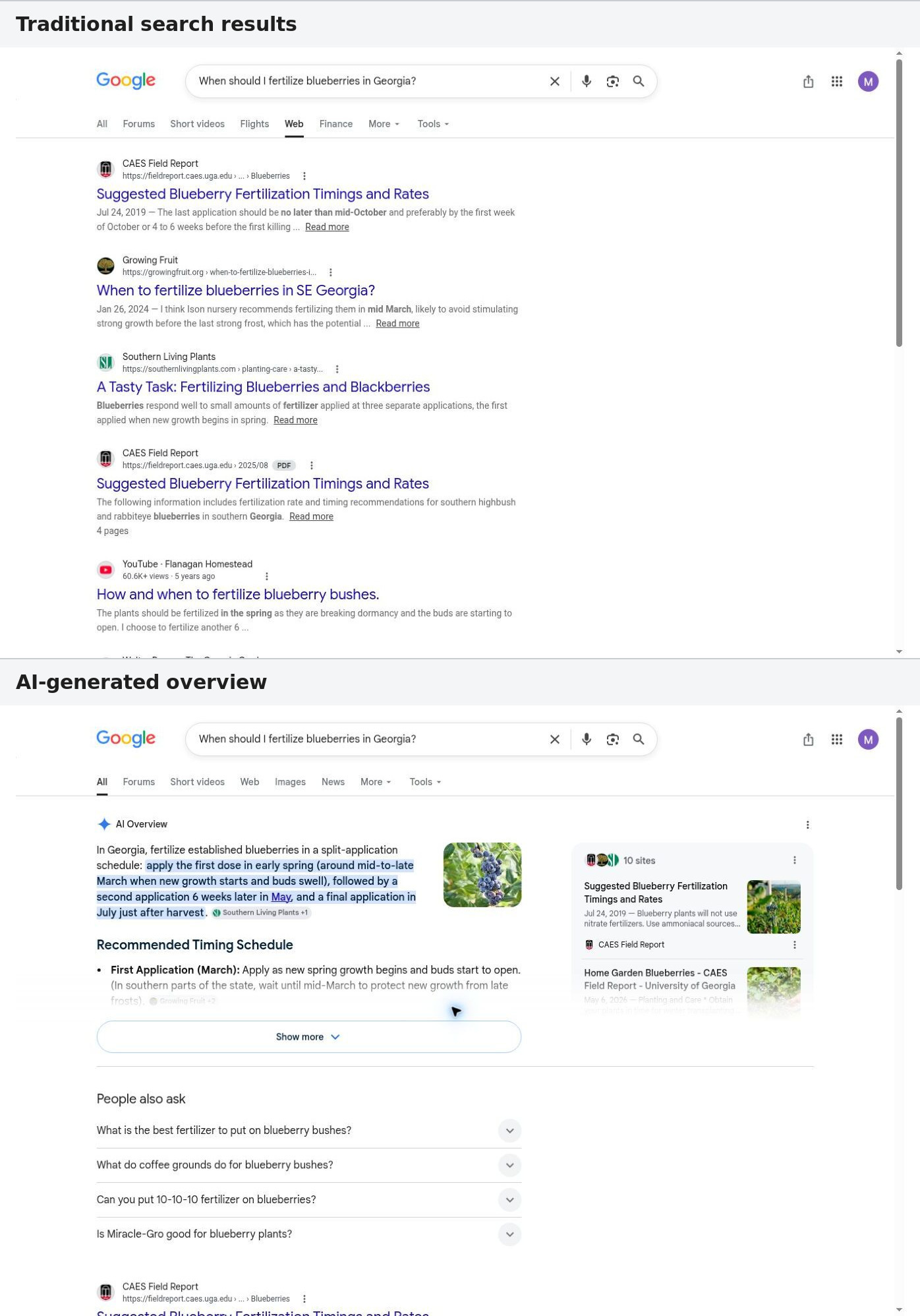
From links to generated answers
Google describes AI Overviews and AI Mode as search experiences that can help people explore complex questions and reach supporting websites. AI Overviews appear within search results when Google determines that a generated summary may be useful. AI Mode is designed for questions that require more exploration, reasoning or comparison.
Sometimes a generated response gives users enough information that they do not click a result, often called a zero-click search. In other cases, the response becomes a starting point for deeper research. Google has reported that people using AI Overviews visit a broader range of websites for some complex questions, although the effect on any individual site can vary.
The change extends beyond Google. Tools such as ChatGPT, Claude, Gemini and Perplexity also synthesize information into conversational answers. Each system selects, combines and presents sources differently, and a source is not guaranteed to be included or cited.
What this shift means for CAES and UGA Extension
Websites are no longer used only as destinations. Their content can also serve as source material for answers presented elsewhere. A person may receive useful CAES and UGA Extension information before visiting one of our websites or without visiting it at all.
That does not make the website or its content less valuable. It makes authoritative, research-based information even more important. AI-generated responses need dependable material to draw from, and users still need original sources when they want context, supporting evidence or recommendations for a specific situation.
What is GEO?
Generative engine optimization, or GEO, is an emerging term for practices intended to make content easier for AI-powered search and answer systems to understand and use. The concept is still developing, and platforms do not offer a formula that guarantees selection or citation. The practical goal is simpler: publish information that is clear, well organized, credible and easy to verify. The term gained wider attention through early research on generative engine optimization, but many of the recommended practices overlap with established content and SEO guidance.
Search engine optimization (SEO) is the process of improving web content and websites to increase their visibility in the search engine results page. This is important because quality information cannot help its intended audience if people cannot find it in the first place.
GEO does not replace search engine optimization. While traditional SEO helps search engines discover, understand and rank content, GEO considers how that content may also appear or be referenced in AI-generated responses. Both depend on accessible, useful and well-organized information.
More information
Read CAES Brand Guidelines on Maximizing content visibility online.
Why CAES and UGA Extension is well positioned
Extension already produces many qualities associated with useful, credible educational content:
- Expert authors. Specialists and agents bring subject-matter knowledge and practical experience.
- Research-based recommendations. Guidance is grounded in evidence rather than opinion or promotion.
- Trusted institutions. University and public-service affiliations give readers clear context about who is responsible for the information.
- Verifiable information. Publications can point to studies, data and additional resources that let readers investigate further.
Those strengths do not guarantee visibility in an AI-generated response, but they do provide a strong foundation. The accessibility work already being done is also part of this foundation. Practices such as using descriptive headings, meaningful link text, image alt text and logical content structure make information easier for people to use while also helping search engines and other technologies understand it. The next step is making those qualities easy for readers and search technologies to recognize.
Next in the series: Five practical ways to prepare Extension content for AI search
